

Maldives or Seychelles: Which Luxury Escape Is Right for You?
By Sebastian Taskila · 3 November 2026
Maldives or Seychelles? Coral atolls and manta rays against granite islands and giant tortoises: a guide to the nature behind a luxury escape.
The Maldives and Seychelles are both Indian Ocean island nations, and both are famous for luxury, but they are not the same kind of place. The Maldives is a country built from coral: atolls, lagoons and reef, where the sea is the landscape and the wildlife is in the water. Seychelles is built from granite: boulders, forest and beaches, with rare plants, birds and giant tortoises on land as well as turtles and whale sharks offshore. Each has resorts that rank among the best in the world, from private island sanctuaries to villas with their own stretch of beach. Whichever one calls to you, we will build a custom luxury escape around it.
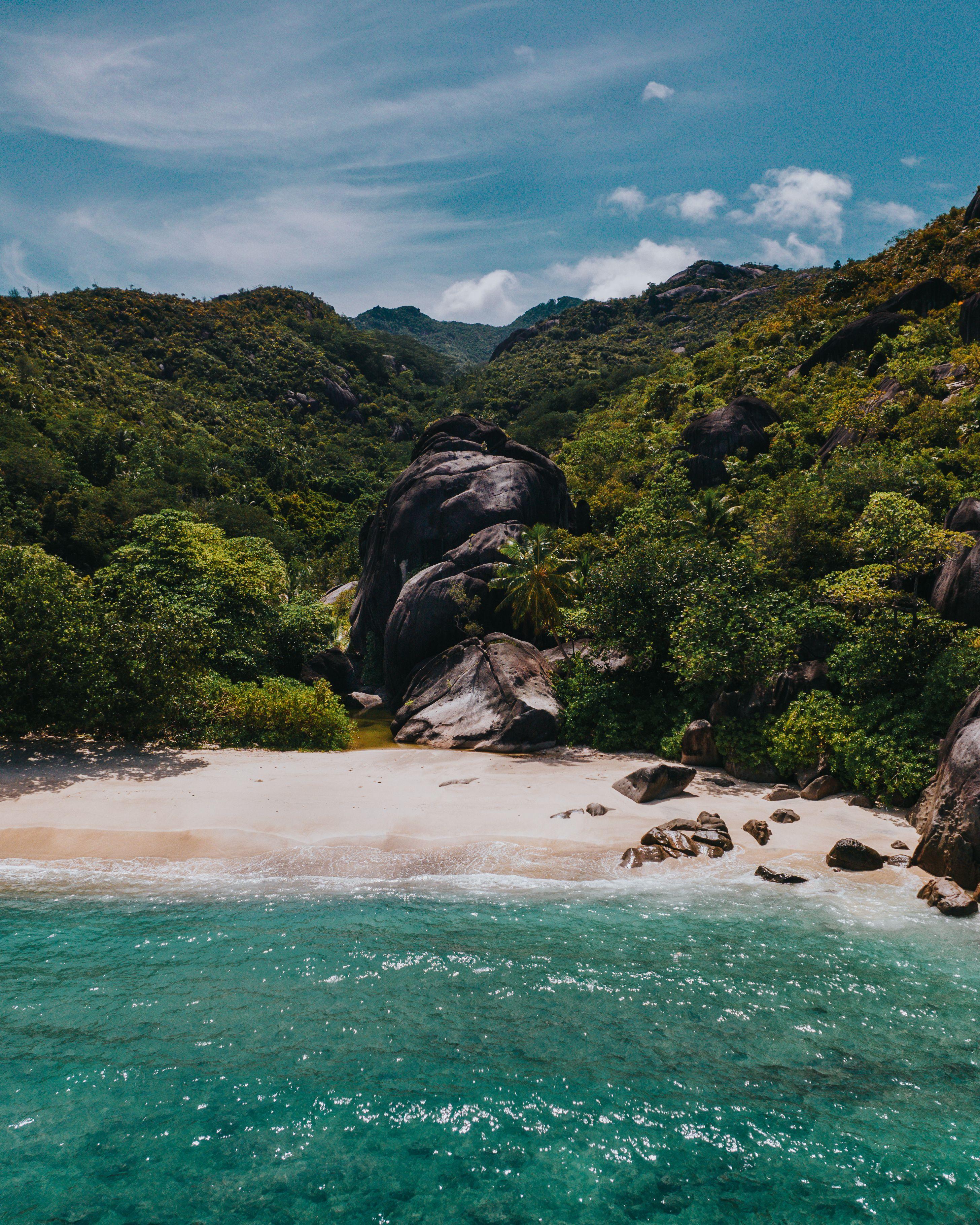
Landscape: coral atolls or granite islands
Start with how each place was made, because it explains everything you will see.
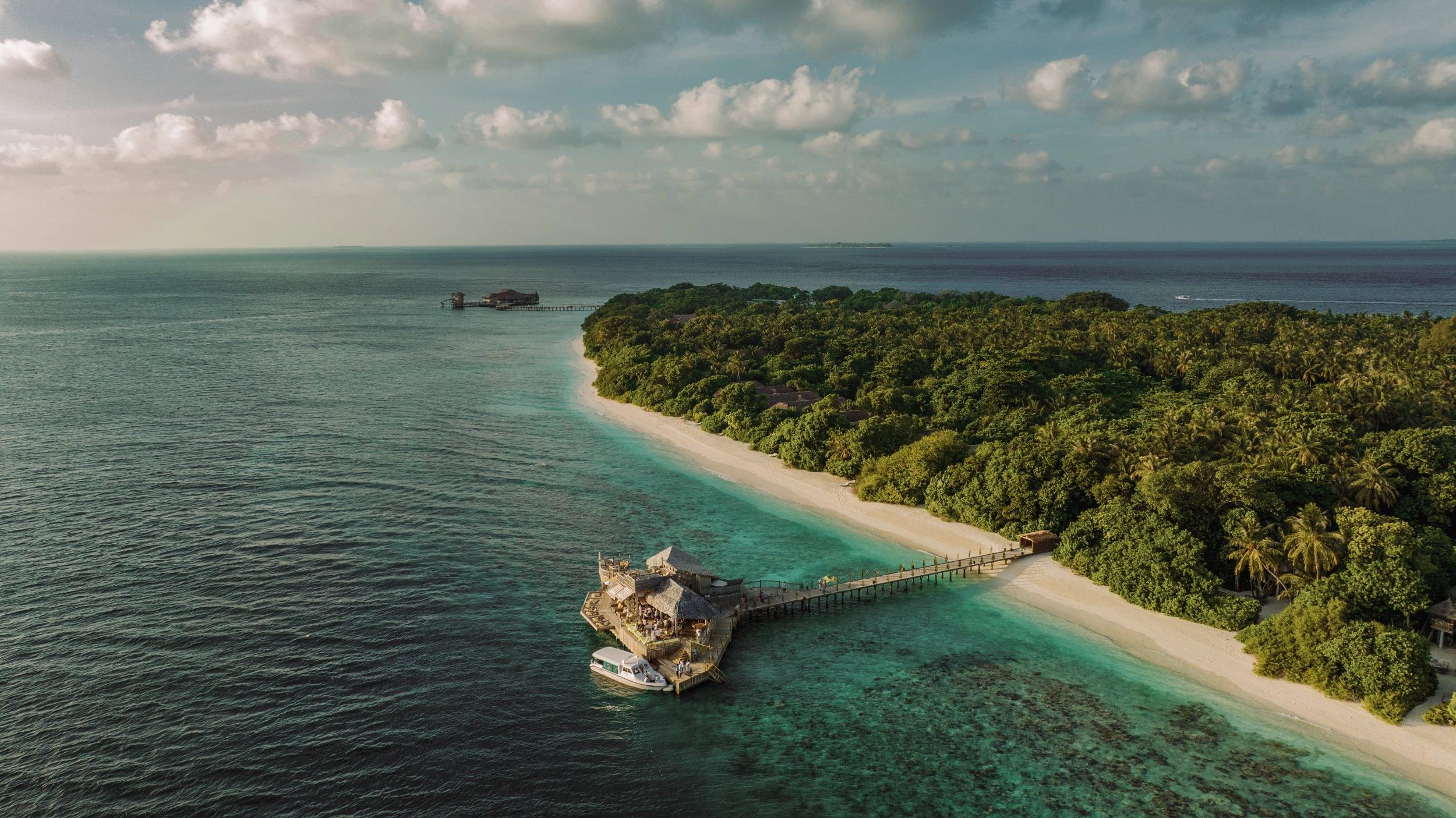
The Maldives has 26 atolls, and each began as a volcano. As the volcano slowly sank, coral kept growing upwards towards the light, until the volcano had disappeared and only a ring of reef remained around a lagoon. The islands that sit on those rings are small, flat and barely above sea level, which is why the view from a Maldivian villa is mostly water, sand and sky. There is no mountain to climb and no forest to cross. The landscape is the lagoon, and it is a very good one.
Seychelles is older and harder. Its main islands, Mahé, Praslin and La Digue, are made of granite, which is unusual for islands in the middle of an ocean. The result is huge smooth boulders standing in clear water and on white sand, with forest climbing the hills behind. Further out, the outer islands are low coral cays and atolls, quieter and flatter, and closer in spirit to the Maldives. The Maldives distils one kind of beauty to its purest. Seychelles puts two side by side.
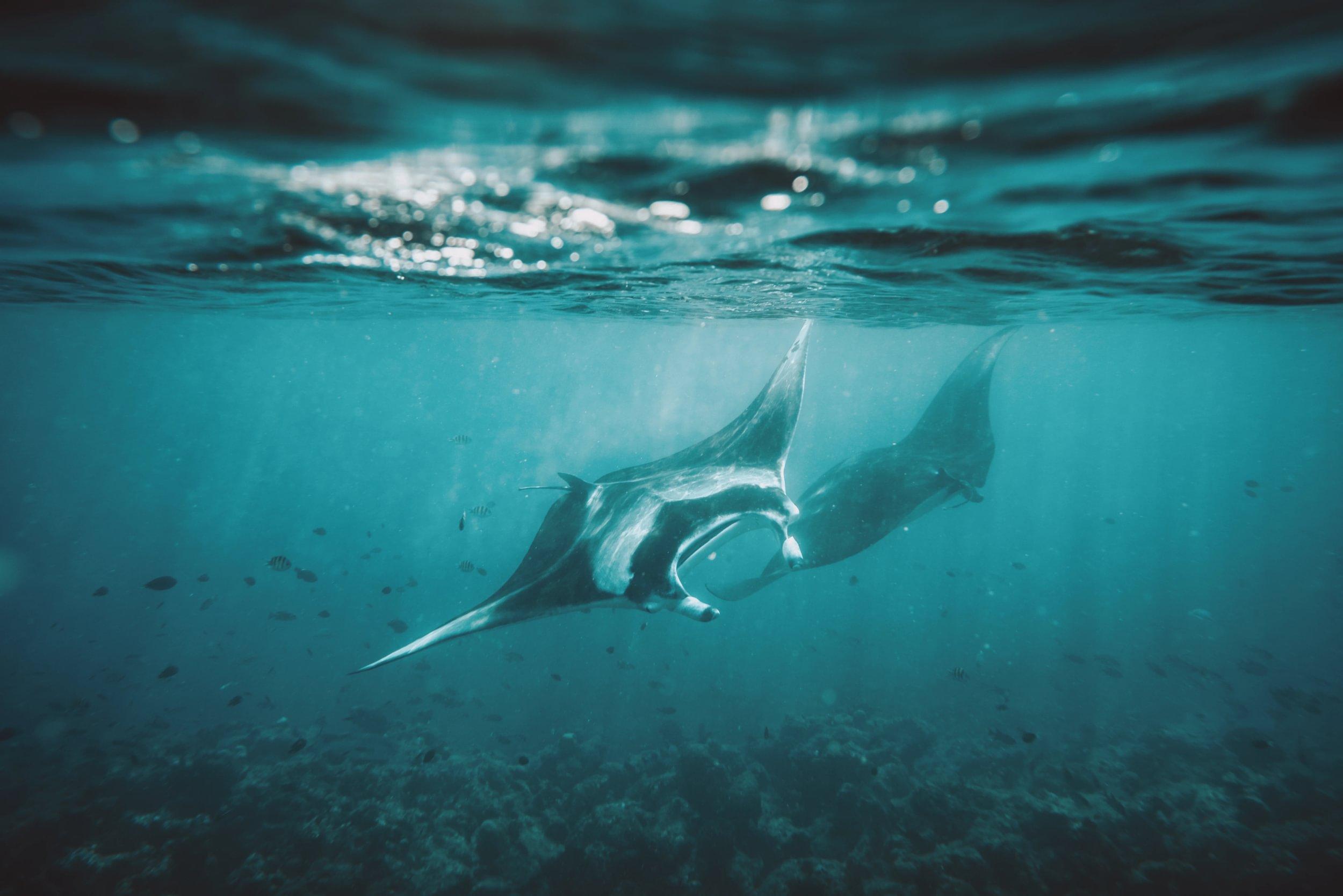
Marine life: manta rays, whale sharks and turtles
Both are among the finest places to be in the water, but they offer different things.
In the Maldives the star is the reef. The country's reefs form the seventh-largest reef system in the world and hold more than 1,000 species of fish. The most famous place is Hanifaru Bay in the Baa Atoll, a small bay about the size of a football field. Its shape concentrates plankton when the monsoon currents push it in, and reef manta rays and whale sharks gather to feed, usually from around June to October. The bay has been a Marine Protected Area since 2009, and the whole of Baa Atoll became a UNESCO World Biosphere Reserve in 2011. Visitor numbers are capped, a certified guide goes with every group, and scuba diving is not allowed, so you watch from the surface.
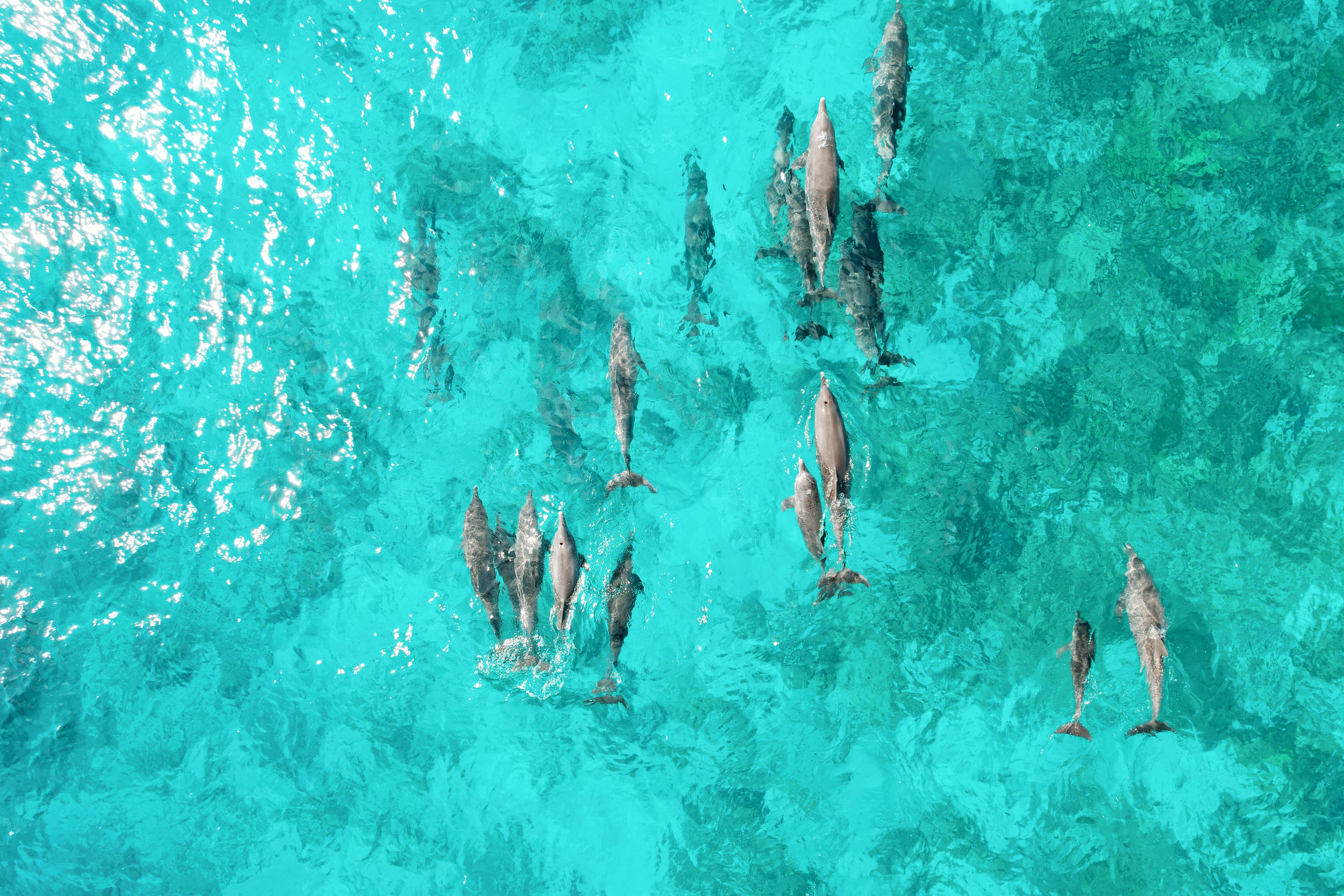
Seychelles has its own marine calendar. Whale sharks gather from roughly August to November, and turtles come ashore to nest at different times of the year. On North Island, green turtle numbers have grown 29-fold since monitoring began in 1995, and more than 400 hawksbill nests were recorded in both 2023 and 2024. For snorkelling and diving, April, May and October are the calmest and clearest months. The Maldives gives you scale and spectacle. Seychelles gives you turtles, sharks and a granite coastline.
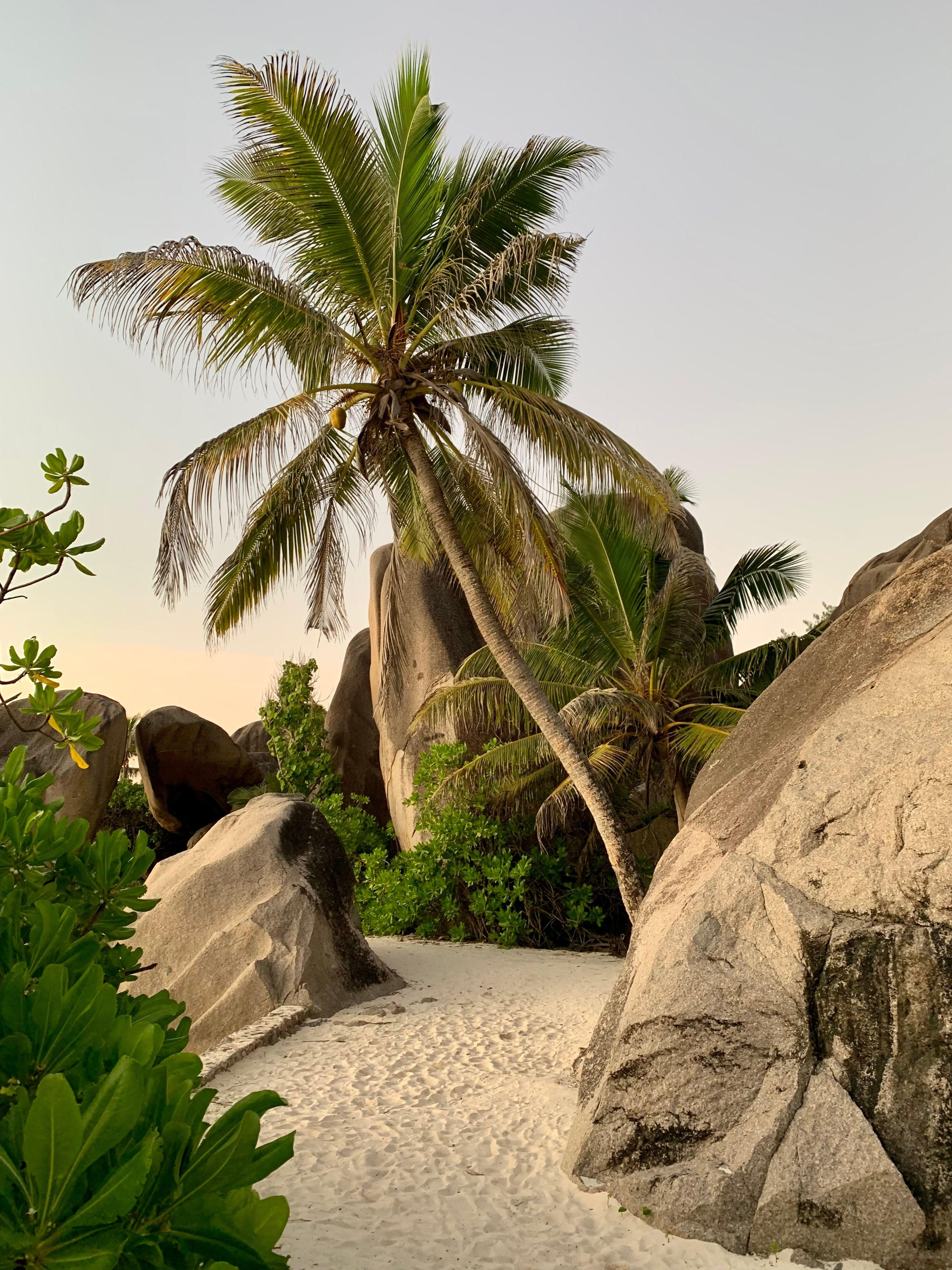
Wildlife on land: tortoises, palms and stargazing
On land the two are very different, and it helps to know before you choose.
Seychelles is the place to walk. The Vallée de Mai on Praslin is a UNESCO World Heritage Site, with 19.5 hectares of palm forest holding the world's largest population of the coco de mer, a palm that bears the largest seed in the plant kingdom. The black parrot, found only on Praslin, lives in the same forest alongside five other palms that grow nowhere else. Further out, Aldabra is a raised coral atoll and a second UNESCO World Heritage Site, with more than 100,000 giant tortoises, large frigatebird colonies, one of only two populations of oceanic flamingos and breeding grounds for green and hawksbill turtles.
The Maldives keeps its drama in the water, so on land the experiences are quieter and more curated. The best resorts turn that into a strength: marine biologists who explain the reef, conservation centres, glassblowing with recycled waste, and observatories on islands with no city lights, where the night sky is the show. It is a different kind of nature. Seychelles suits a traveller who wants to walk to the wildlife. The Maldives suits one who wants everything underwater and unhurried.
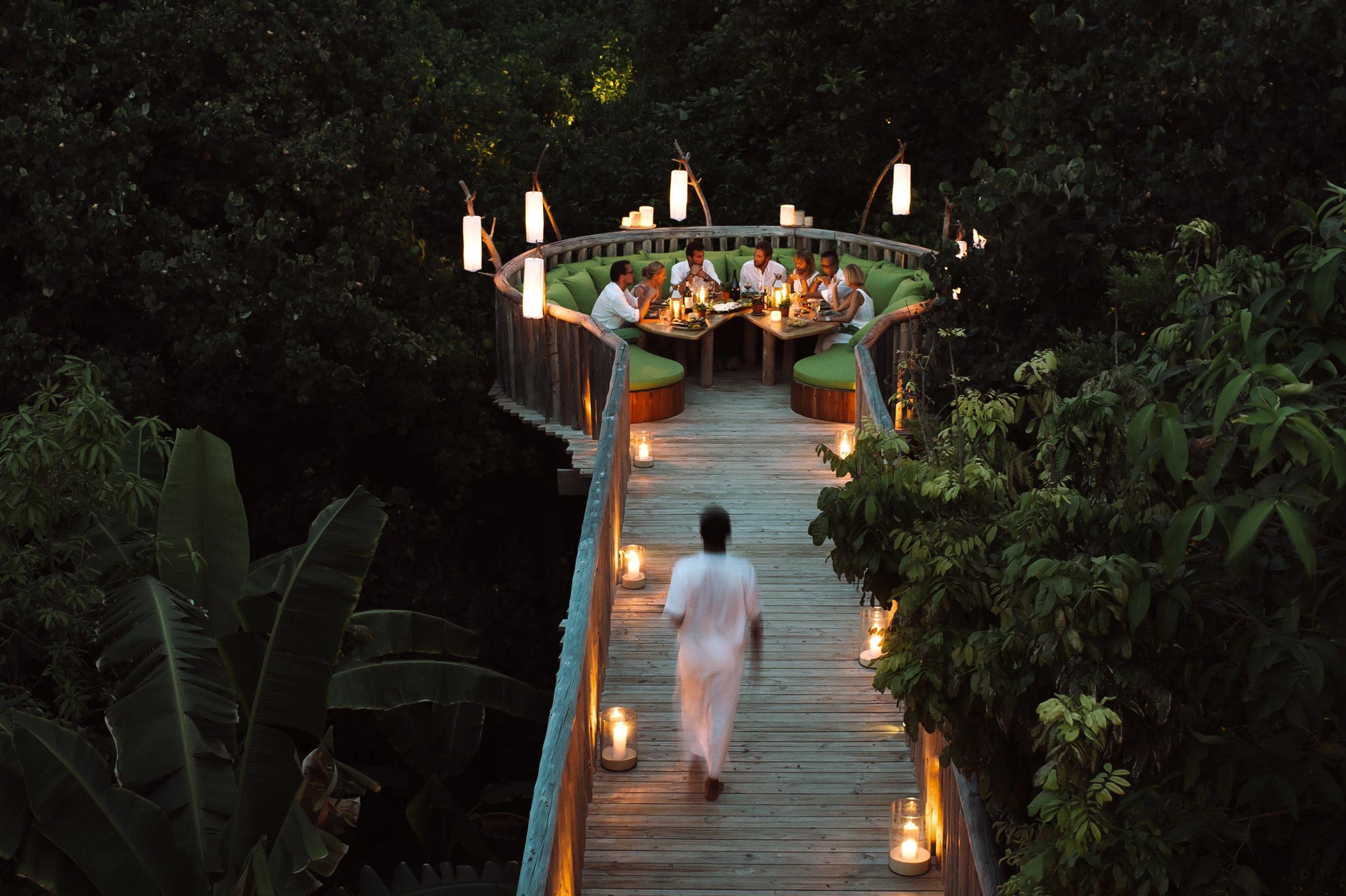
The best luxury resorts in the Maldives and Seychelles
Luxury in both places is about space and privacy, but each does it differently.
Soneva Fushi and Soneva Secret, Maldives
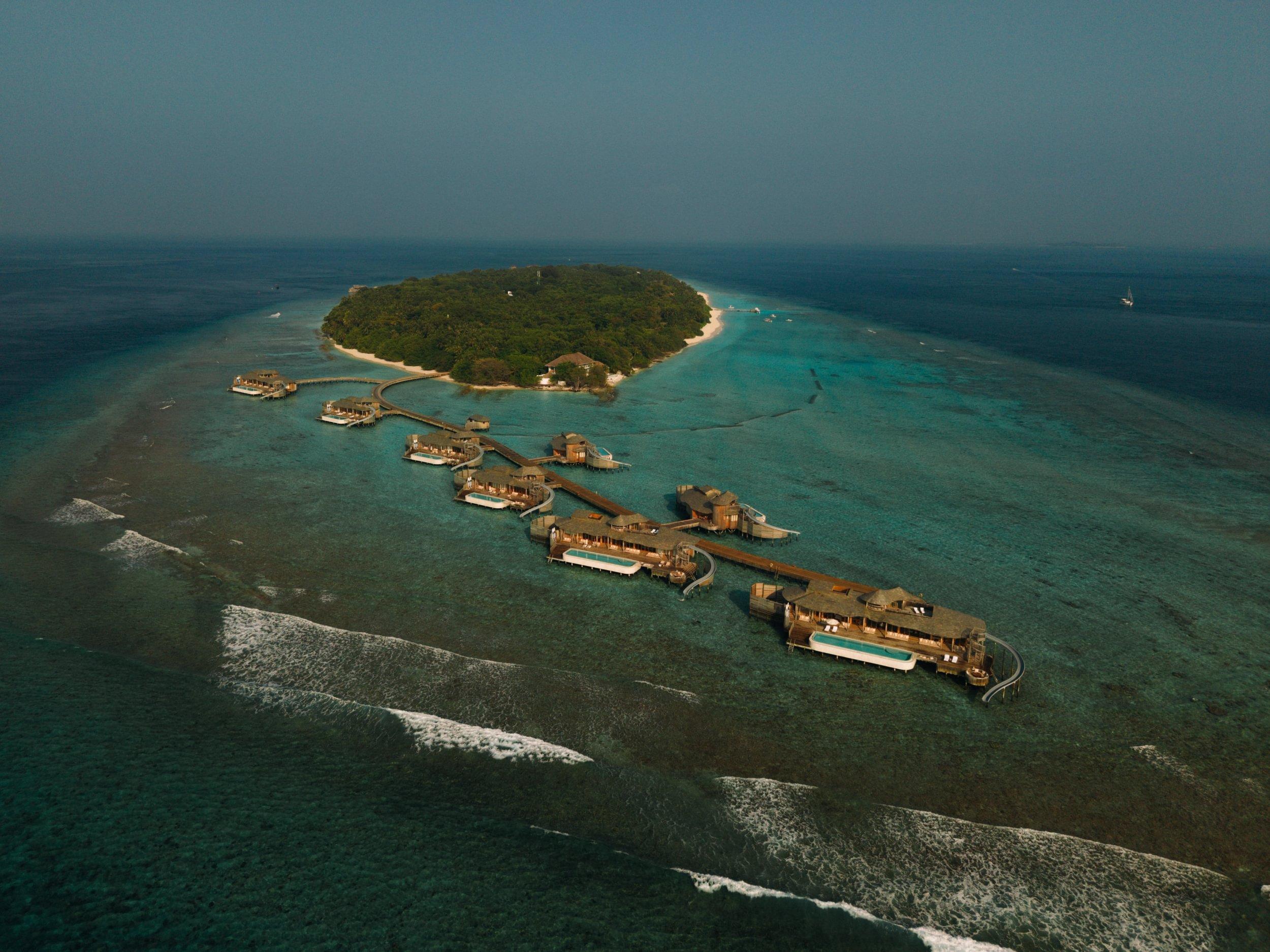
Soneva Fushi, on the island of Kunfunadhoo in the Baa Atoll, is the original barefoot island. It sits inside the UNESCO Biosphere Reserve, about 30 minutes by seaplane from Malé, and its villas are built from reclaimed wood and palm thatch, with solar power and a conservation centre on the island. Treetop dining reached by zipline, an open-air cinema and an observatory give it a character that is part jungle and part lagoon, and its guests are close to Hanifaru Bay in the manta season. Soneva Secret, which opened in 2024 in the northern Maldives, is the opposite scale: 14 villas on the island and over the water, each with its own team and private chef, in a private, undisturbed setting. Our ten-night escape for two at Soneva Fushi is built around the island's sea and sandbank.
North Island and Cheval Blanc Seychelles
North Island is a small private granite island with just 11 villas, about 20 minutes by helicopter from Mahé, and it has been in the same family since 1826. Since 1997 its Noah's Ark Project has restored the island's habitat, and it now has more than 130 Aldabra giant tortoises and a reintroduced population of the critically endangered Seychelles white-eye. The island won the National Geographic World Legacy Award in 2017 and can be booked exclusively. Cheval Blanc Seychelles is a different kind of luxury. It opened in December 2024 on Mahé, curving around the beach of Anse Intendance, with 52 villas designed by architect Jean-Michel Gathy, five restaurants and a spa created with Guerlain. One is a private island refuge. The other is a statement of design, with the Indian Ocean in front of every villa.

Ten all inclusive nights for two at Soneva Fushi, based in a 1 Bedroom Villa Suite with Pool: jungle privacy, Soneva Soul, a night aboard Soneva in Aqua, Hanifaru Bay and a private sandbank under the stars.
From USD 74,000Discover the experience →
Fourteen nights in The Private Reserve, Soneva Fushi's nine-bedroom desert island mansion for up to 16: private spa, gym, cellar, lagoon-style pool and seventy metres of beach, with the whole island beyond.
From USD 262,000Discover the experience →
A full buyout of Soneva Secret on Dhipparufushi in the Makunudhoo Atoll: fourteen villas, each with its own team, for one family, one celebration or one gathering.
From USD 107,000 per nightDiscover the experience →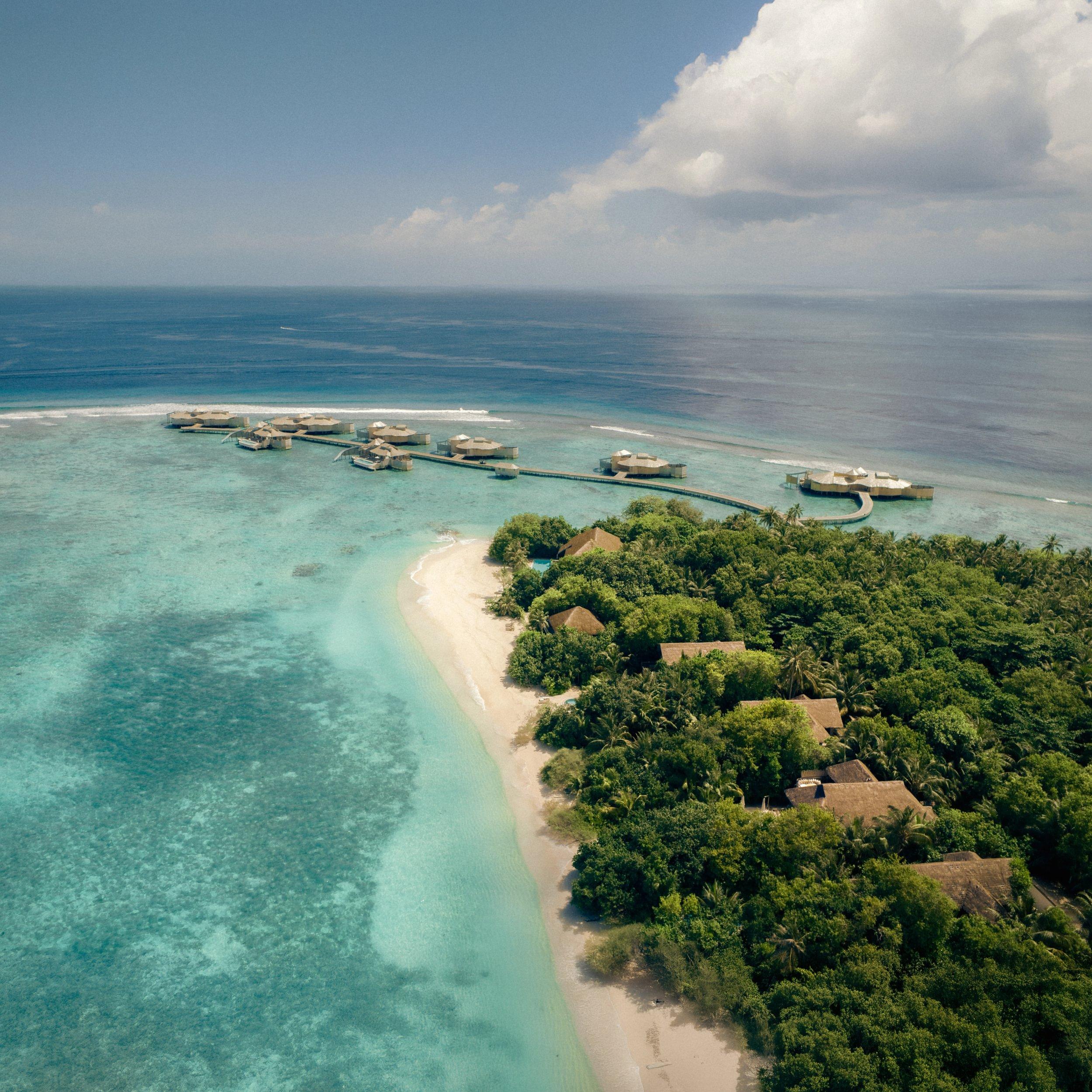
Best time to visit the Maldives and Seychelles
Each has a season when it is at its clearest and a season when its wildlife is at its best.
When is the best time to visit the Maldives?
The dry season runs from about December to April, with the most sun and the calmest sea. From about May to November the weather is wetter, but June to October is also when manta rays and whale sharks feed at Hanifaru Bay, so many travellers choose those months for the wildlife. The water stays warm all year.
When is the best time to visit Seychelles?
April, May and October are calm and clear, with light winds and the best conditions for diving and snorkelling. From about May to September it is drier and cooler, with stronger trade winds that can roughen exposed beaches. The warmer, wetter months run from about November to March. Whale sharks gather from roughly August to November.
Getting around: seaplane, helicopter and boat
In both countries the journey to the resort is part of the experience.
In the Maldives you land in Malé, and most island stays continue by seaplane or boat, flying low over the atolls and the colours of the lagoons below. In Seychelles you land on Mahé. Cheval Blanc is on the island itself, while North Island is a short helicopter flight away, and from Mahé you can also reach Praslin and La Digue by short flight or boat, and the outer islands beyond.
Frequently asked questions
Is the Maldives or Seychelles better for a luxury honeymoon?
The Maldives is the classic honeymoon: a villa over the lagoon, a private sandbank dinner and a seaplane arrival. Seychelles suits a honeymoon with more variety, with granite beaches, forest walks, tortoises and more than one island. Both have resorts built for two.
Which is better for wildlife?
It depends where you want to see it. The Maldives is the better choice for manta rays, whale sharks and reefs. Seychelles has more wildlife on land, including the coco de mer palm, the black parrot and the giant tortoises of Aldabra, along with turtles and whale sharks offshore.
When can you see manta rays and whale sharks?
In the Maldives, manta rays and whale sharks feed at Hanifaru Bay in the Baa Atoll, usually from around June to October. In Seychelles, whale sharks gather from roughly August to November.
Can you book a whole private island in Maldives or Seychelles?
Yes. In the Maldives, a whole-island buyout gives one group the entire island, and our private island buyout runs for four to seven nights. In Seychelles, North Island can be booked exclusively, with its 11 villas and conservation programme.
Which is better for a family or a large group?
The Maldives, if you want everyone in one place, because a private island or a large residence lets a group spread out and meet for dinner. Seychelles suits a group that wants to see more than one island.
What makes Zameera different from other luxury travel companies?
Zameera is a Dubai-based ultra-luxury travel and experiences company, and we curate journeys for ultra-high-net-worth travellers rather than selling rooms. Each journey is designed as a whole: the stay, the transfers, the boats and the private team, arranged around your dates, so the trip is yours from arrival to departure. We choose the places and specialists we work with carefully, and we shape every trip around your group. The same approach runs through the rest of what we do, from private island buyouts to fully private expeditions.
How do you choose between the Maldives and Seychelles?
Choose by the nature you want around you, then check the season, then decide how private you want it to be. If you want warm clear water, reefs and manta rays, choose the Maldives. If you want granite, forest, rare palms and giant tortoises, choose Seychelles. The season follows from that choice. The Maldives is at its clearest from December to April, with manta rays at Hanifaru Bay from roughly June to October, and Seychelles is calmest in April, May and October. Privacy is the last decision and the one that changes the trip most: a whole island or a private villa, with your own team, is where the best escapes are. If you would like to see how these fit together for you, request a custom experience and tell us the dates, who is travelling and the nature you most want to see. We shape each trip around your group, from the transfers to the private team. You can also see the full range at Zameera.